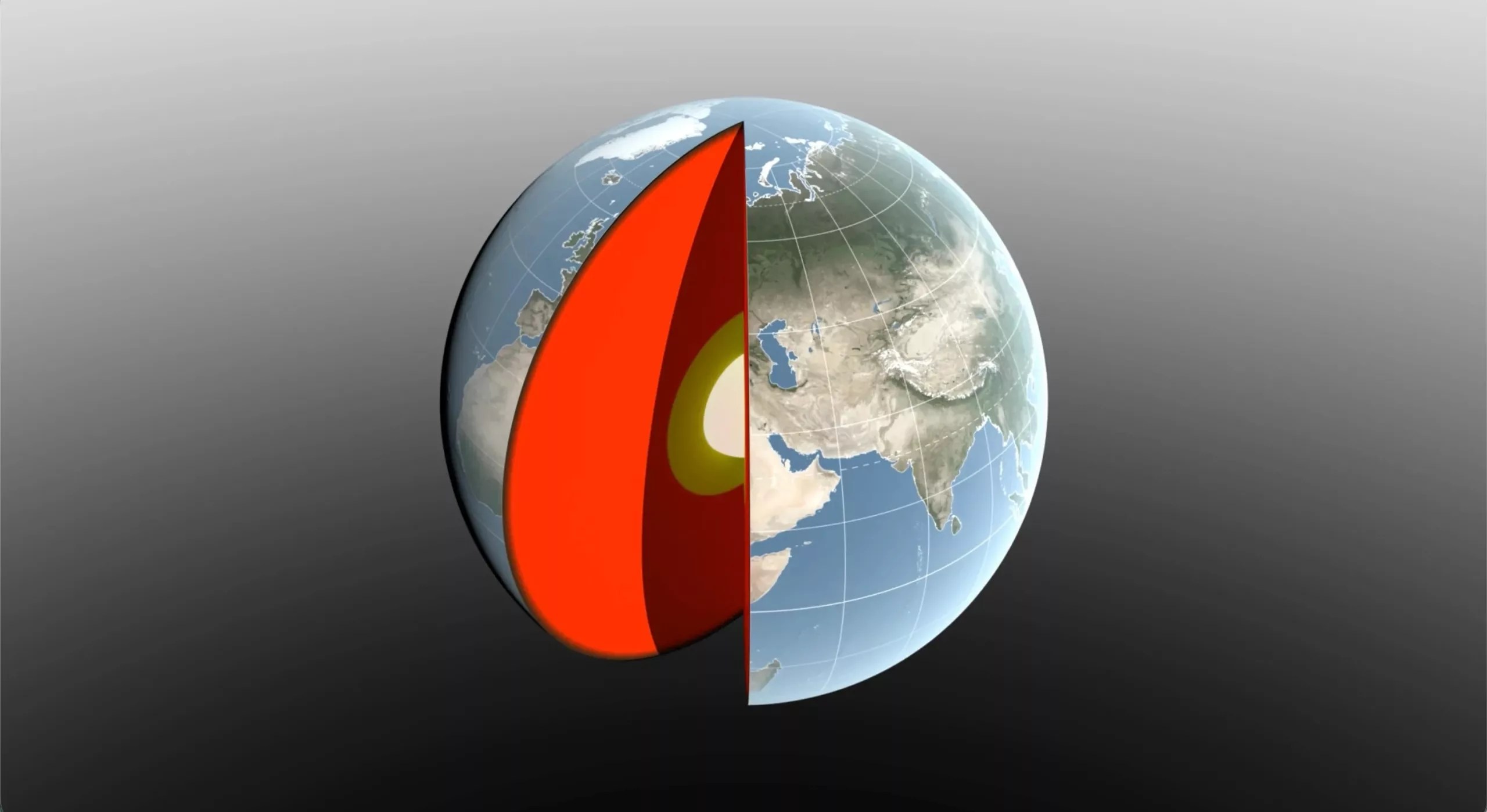
Why Earth’s “Center” Is a Moving Target
Personally, I think the idea that our planet has a fixed, unchanging core is one of those comforting myths we learn in school and never question. In reality, the Earth’s mass is constantly shuffling around like a restless sleeper, and the point we call the center of mass wobbles with the seasons. What makes this particularly fascinating is that the wobble is measured in mere millimeters—yet those tiny shifts ripple through everything from satellite GPS to the way we map crop yields.
The Hidden Bias in Ground Stations
One thing that immediately stands out to me is how the very tools we rely on to measure this wobble are themselves skewed. Half of the satellite laser ranging stations sit in Europe and North America, which means the “center of figure” we calculate is already tilted toward the Northern Hemisphere. From my perspective, this is like trying to gauge the average temperature of a planet by only placing thermometers in sunny beaches and ignoring the poles. The result? A systematic offset that masquerades as a real geophysical signal.
A New Hybrid Technique: GPS Meets Satellite Orbits
What many people don’t realize is that the breakthrough from NASA’s Jet Propulsion Laboratory isn’t just a fancier laser; it’s a clever marriage of two independent data streams. By blending precise GPS measurements from ground receivers with orbital tracks of low‑Earth‑orbit satellites, the team essentially creates a denser, more globally distributed net. In my opinion, this hybrid approach is akin to using both a wide‑angle lens and a telephoto shot to capture a landscape—you get both the broad context and the fine detail. Importantly, the method also folds in the elastic response of the crust to water and ice loads, something the older laser‑only technique ignored.
What the Numbers Really Tell Us About Water and Air
When I first read that the revised seasonal swing of Earth’s mass center is about half of what we thought eight years ago, I did a double‑take. It suggests that the hemisphere‑to‑hemisphere shuffling of water vapor, rain, and snow is less massive than earlier models assumed. A detail that I find especially interesting is how the Amazon’s April deluge—roughly 2,400 gigatons of rain—shifts the center by only 2.2 mm toward South America. To me, that underscores just how delicately the planet balances its fluid envelopes; a colossal volume of water produces a barely perceptible nudge.
Seasonal Shifts: A Planetary Pulse
If you take a step back and think about it, the Earth’s center of mass behaves like a slow heartbeat. In March, snow piling up over Eurasia and North America pulls the point ~3 mm northward; in April, the Amazon’s rain pushes it southward; the monsoon in Southeast Asia adds another wiggle in November; and the dense winter air over Arabia and South America creates opposite tugs at the solstices. What this really suggests is that the planet’s mass distribution is constantly being reshaped by the dance of atmosphere, oceans, and land‑based water, a rhythm that is both predictable and subtly variable.
Why This Matters for Everyday Tech
From my perspective, the practical payoff of nailing down this wobble goes far beyond academic curiosity. Modern navigation, precision agriculture, and even global shipping rely on reference frames that assume a stable center of mass. If our models are off by even a few millimeters, over time those errors can accumulate into noticeable misplacements—think of a drone missing its target by a meter after a year of uncorrected drift. By unraveling the mechanisms that shift our reference frame, we can build better, more resilient systems that keep our increasingly interconnected world on track.
A Deeper Thought: The Illusion of Stability
One lingering question that sits with me is how often we mistake instrumental artifacts for genuine planetary signals. The history of geodesy is littered with cases where uneven station distribution or unmodeled elastic deformations led to false trends. In my view, the JPL study serves as a reminder that improving measurement isn’t just about adding more satellites; it’s about questioning the assumptions baked into our reference networks. As we push toward ever‑higher precision—think of real‑time Earth‑monitoring for climate alerts—recognizing and correcting these subtle biases will become as crucial as the observations themselves.